
Cleveland County Mugshot Records
A mugshot is a booking photograph made during an arrest or intake. It identifies the person for that event. It does not prove guilt, conviction, or present custody. Charges can be dismissed, reduced, amended, or resolved later. A person may also have several bookings, each with a different image. Keep the booking number, arrest date, arresting agency, and case number with any photo so an old image is not mistaken for a new event.
Oklahoma Attorney General training identifies mugshots and arrestee descriptions as law-enforcement records. Access still depends on whether the agency keeps the image and whether a statute or specific exemption permits withholding or redaction. The Cleveland County current roster is only an online view of selected active records. It is not the full sheriff records archive.
Note: Keep the booking date with the image so an older arrest is not mistaken for current custody.
Find Cleveland County Released Mugshots
Every photo channel has a different scope. The sheriff portal is useful while a county booking remains active. CCSO Records is the durable official route after release. ODOC applies only when state custody or supervision is involved. A registry applies only to people with a continuing statutory duty. News and copied images can help locate a source, but they do not establish release.
| Channel | Has a photo? | How to access and interpret it |
|---|---|---|
| CCSO current inmate portal | Sometimes | Search an active custody entry; some records have no image and no released archive is exposed |
| CCSO Records | If maintained and public | Request the image tied to an exact booking number or date |
| Official sheriff app | Not verified | Published features do not advertise inmate or mugshot access |
| ODOC record | May appear | Use only for an ODOC offender and call it an offender photo unless provenance proves the county booking |
| Oklahoma registry | Can appear | Applies only to a person covered by that registry statute; label it a registry photo |
| Official news or press item | Sometimes | Event-driven and incomplete; verify whether the image is an arrest photo, booking photo, or another portrait |
| Independent copied source | Sometimes | Use only as a lead and return to the official booking, court, or custody record |
VINELink is a custody-notification system. Its record fields vary by agency, and a photo should not be promised. Even when an image appears in a state or registry result, it may not be the photograph taken at the Cleveland County jail.
Cleveland County Mugshot Portal Limits
The official CCSO inmate portal is configured for current custody. Its visible results can include a mugshot, name, date of birth, and arrest date. Some active entries have no image. The Cleveland County configuration does not provide a released-photo archive, a release-date filter, or a recent-release view. Generic features that may exist in the vendor platform do not change the county’s enabled public view.
The captured current portal below shows the source used for active Cleveland County inmate records. Its current-custody setting is the key limit for released-inmate photo discovery.
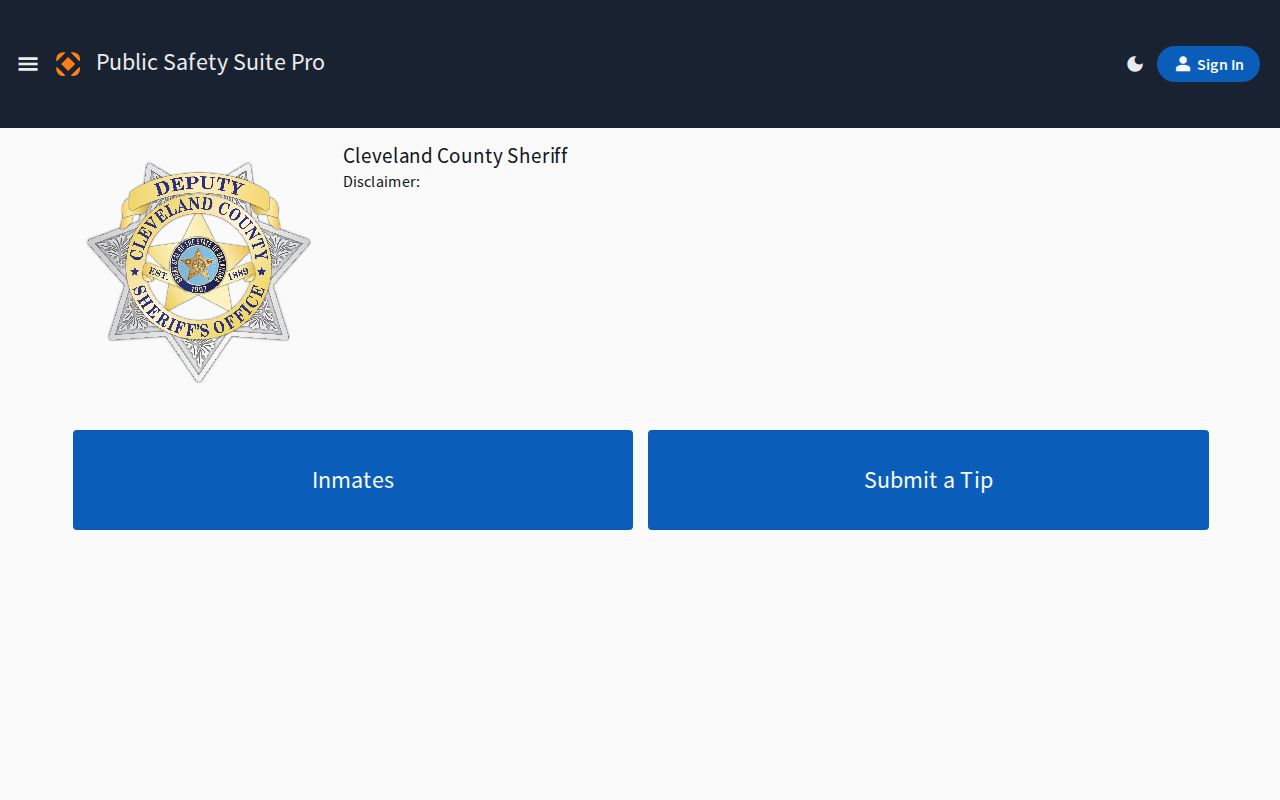
A missing photo can mean the active record lacks an image. A missing person can reflect release, transfer, lag, misspelling, or no Beggs Detention Center booking. Neither absence proves what happened.
Note: Cleveland County publishes no online retention period for mugshots after a current roster entry disappears.
Request Cleveland County Booking Photos
After an entry leaves the roster, ask CCSO Records for “the booking photograph associated with booking [number/date].” Exact identification prevents a photo from another arrest or a person with the same name from being returned. Pair the photo request with the jail-register discharge fields when release context matters.
- Gather the full legal name, date of birth if known, booking number, arresting agency, and a narrow booking-date range.
- Email
ccsorecords@clevelandcountyok.comor use the county request route. Describe the existing record, not a custom report. - Ask for the booking photograph and the booking/release record, including release date or manner of discharge if maintained and public.
- Request electronic delivery and a cost estimate before chargeable work. Do not assume the posted report-copy price covers every photo or packet.
- If material is withheld, ask for the legal basis and any segregable nonexempt portion.
- Compare the returned booking number and date with the case and custody record before identifying the image.
CCSO Records is at 2600 W. Franklin Road, Norman, and lists 405-701-8888. Its posted hours are Monday through Friday, 8 a.m. to 5 p.m. The office says ordinary report copies are $5 and free to crime victims, but a complete booking packet, photograph, video, or extensive search may be priced differently. Ask before paying or sending storage media.
Cleveland County Mugshot Access Law
Section 24A.8 of the Oklahoma Open Records Act governs public law-enforcement information, including specified jail-register and booking information if kept. Oklahoma Association of Broadcasters v. City of Norman, 2016 OK 119, is especially relevant in Cleveland County. The Oklahoma Supreme Court held that the right to inspect covered Section 24A.8 records includes obtaining a copy.
The decision supports requesting a maintained copy. It does not make every law-enforcement image public without exception, and it does not require the sheriff to keep a released-photo gallery online. Juvenile, sealed, expunged, victim-sensitive, medical, investigative, and other protected material can be withheld or redacted under applicable law. Ask for the public portion rather than assuming the whole file must be released.
The official Section 24A.8 text is the best source for the current law-enforcement record language. A requester should identify the existing booking and photograph, ask for a copy in a practical format, and let the records custodian apply any valid exemption. That approach is more precise than asking the agency to research every person with a similar name.
Cleveland County Sheriff App Photos
CCSO promotes an official mobile app, but the published feature list covers tips, sex offenders, staff contacts, news, alerts, closures, and public safety. Neither the store descriptions nor the reviewed sheriff announcement advertised inmate search, recent releases, or mugshots. The app is a real official access channel, but it is not a verified substitute for the missing released-photo archive.
The CCSO homepage and app announcement is the source for the official app links. The captured announcement below documents the app without implying a feature that the agency did not advertise.
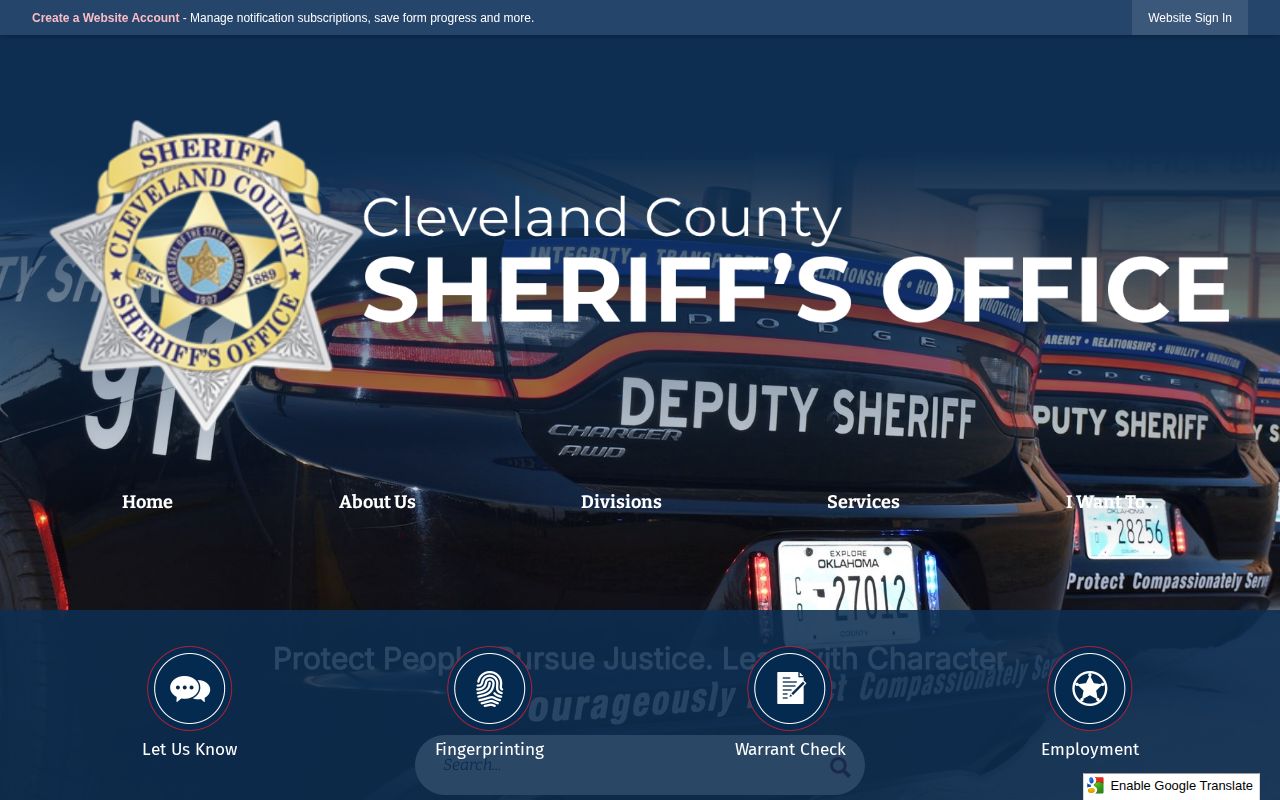
App menus and features can change. A future version should be checked directly before claiming it contains released mugshots or inmate records.
Note: An official sheriff app is not evidence of an inmate-photo feature unless its live menu or agency description confirms one.
Cleveland County ODOC Photo Differences
An ODOC search result may display an offender image, but the public interface is session-gated and can change. ODOC’s physical-identification policy shows that the agency maintains identification data. That fact alone does not guarantee a public photo in every record. If a live result displays one, retain the DOC number, status, and source label.
A person transferred from the Beggs Detention Center to LARC may receive an ODOC intake image. That is not automatically the same as the earlier Cleveland County booking photograph. LARC is the statewide male reception point, and the county-to-LARC move is continued state custody. Call the image an “ODOC offender photo” unless the record proves it was the CCSO booking image.
Oklahoma registry profiles can also contain identifying photos. The sex-offender and violent-offender registries cover people with duties imposed by specific statutes, not all released inmates. A registry image should be called a registry photo. Presence confirms that profile, while absence does not prove incarceration or erase an earlier county booking.
Cleveland County Mugshots in News
CCSO news releases and social posts may include selected arrest or incident images. Local reporting may preserve an image after the person leaves jail. These sources are event-driven, not complete archives. A news photo can also be a file portrait, surveillance still, or agency handout rather than a mugshot.
Independent booking-image publishers can retain stale copies, confuse jurisdictions, omit later dispositions, or ask for money. Treat those copies only as discovery leads. Do not use them to confirm release. Search the exact CCSO booking and Cleveland County court record before repeating any claim, and do not link to or endorse commercial mugshot or removal services.
For a named person, the Cleveland County release-record search path provides the official custody and court sequence. The photo identifies an event; the jail register and court chronology explain what happened afterward.
Context should travel with the image. Keep the publisher, publication date, booking date, named agency, and later court disposition in the same research note. If the image came from a press item, check whether the caption calls it a booking photo or merely identifies the person. If a copied page lacks provenance, locate the original agency record before describing it. A retained image can be authentic yet still be old, incomplete, or unrelated to the current custody question.
Cleveland County Mugshot Expungement
Oklahoma distinguishes a full expungement under 22 O.S. §18 from a 991(c) deferred-sentence disposition update. A successful 991(c) result changes the court disposition in the described way but does not by itself remove the arrest record. A qualifying Section 18 order can seal covered court and arrest records. Eligibility depends on the statutory category and required conditions.
No current standalone Oklahoma anti-pay-to-remove statute was verified in the research. Do not claim that one guarantees removal. An expungement order has a defined scope, and independent publishers require separate correction or removal analysis. Deletion should never be promised.
When an official or copied image is wrong, contact the creator. Give CCSO Records the booking number and correct source document for a county photo. Send court-file issues to the Cleveland County Court Clerk, ODOC image issues to Legal Services or Closed Records, and copied-image issues to the publisher. Preserve the exact URL, correspondence, and requested correction.
A correction request should state the narrow problem: wrong person, wrong booking date, incorrect source label, missing disposition, or an image covered by an order. Attach the certified or official record that supports the change. A later dismissal does not mean the photograph was fabricated, but it is vital context. Likewise, release does not erase the booking event by itself. The record holder must apply the actual court order and the law governing its files.